



Cellulite: Causes, Symptoms, Treatment & Removal
Home > Health Articles > Cellulite
What is Cellulite?
If you want to avoid cellulite, you may need to start at quite a young age as cellulite can develop as early as 15 and usually continues to worsen as you grow older. This is because the skin gets thinner, which makes the cellulite more visible and looser, which allows more of the adipose fat cells to press towards the skin surface.
Table of contents:
Causes & symptomsTreatment
Causes & Symptoms of Cellulite
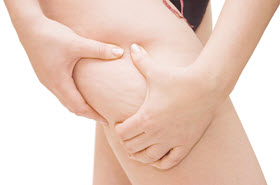
The symptoms of cellulite are the appearance of that orange peel or mattress like areas of skin on mainly the hips, thighs and buttocks; those lumpy fat bulges that you can’t seem to lose. While cellulite is mainly considered to be a cosmetic condition, recent research has shown that changes over time in the body’s skin structure actually lead to the transformation of fat cells into cellulite. Proper cellulite treatment is recommended if you want to retain elasticity and smoother, younger looking skin.
Other causes of cellulite as we grow older are that our bodies become less efficient in getting rid of waste products, our circulation may not be as good and of course we often put on weight. Cellulite is a well known and common condition in women appearing mostly on the hips and thighs but also on the back below the shoulders, on the ankles and on the inside and the back of upper arms as well as the stomach.
The most effective way to avoid cellulite is through lifestyle changes especially if your family is prone to cellulite.
Here are some more causes and symptoms of Cellulite:
- Digestive disorders such as irritable bowel syndrome, constipation and liver problems are often blamed for the development of cellulite on the stomach.
- Constant stress leading to tension in the neck muscle, problems with the vertebrae and inflamed tissue is thought to cause cellulite in the back of the neck. Prolonged stress and the associated surge of adrenaline can even lead to increased fat storage in the stomach, hips, buttocks and thighs.
- Cellulite in the upper arms and legs is common in older women and is thought to be partly caused by impaired vein systems in the arms and legs.
- Surprisingly, it is thought that too much leg exercise can cause the cellulite that appears on the front of the thighs. But this would not be the only cause.
- A genetic predisposition will make you more vulnerable particularly if you have the kind of lifestyle that aggravates the condition.
- The septae structure under a woman’s skin is very fibrous and mesh-like so it is prone to trapping fat cells.
- The female hormones – estrogen and progesterone. The former encourages fat cells to develop and grow around the breasts, thighs and buttocks while the latter can lead to fluid retention, weak veins, and weight gain.
- Pregnancy is a time for drastic change in a female’s body including fluid retention and a surge of hormones. The growing uterus can also affect circulation and lymph drainage. Any cellulite problems will usually get worse with each successive pregnancy. One bit of good news is that breastfeeding is very beneficial for cellulite treatment.
- A sedentary lifestyle is very bad for the blood circulation as well as the venous and lymphatic systems. Without muscle contractions and movement, those systems exert pressure and stretch the veins and lymph vessels. Once they are overstretched, they are more prone to fluid retention, leaking and poor circulation. A sedentary lifestyle also usually means weight gain which is another cause of cellulite.
- Cigarette smoke is particularly damaging to vein and capillary walls, causing inflammation and leaking. Nicotine itself can affect your circulation.
- Overweight and obese women are more prone to getting cellulite. Any fat accumulation will also push the existing cellulite outward so that it is more noticeable.
- Crash diets are particularly harmful leading to an increased tendency for the body to store fat.
- High fat and sugar consumption often lead to excess calorie and fat intake causing an increase in body fat and then cellulite. Highly processed foods containing preservatives, artificial sweeteners and other additives cause a build up of toxins in the body and ultimately, cellulite.
- Food allergies can also play a role because they lead to food craving, weight gain, bloating and water retention, all of which can lead to cellulite.
- Unfortunately, aging plays a big role in the development of cellulite as our bodies become less efficient in getting rid of waste products, our circulation is not as good and we even tend to put on weight. Prolonged exposure to the sun can accelerate the skin aging process.
There is certainly no shortage of hereditary, environmental and behavioral causes for the development of cellulite in women.
Treatment of Cellulite
If you are going to be successful in fighting and removing any cellulite in your body, it is going to take some perseverance on your part. All the muscles in our bodies are covered with a fatty padding surrounded by liquid. This liquid supplies the padding with nourishment and takes away the waste products. There is also a network of fibers which holds together the padding. If all these elements are working well, our bodies have smooth curves.
Problems start arising if the waste products are not removed properly. They can build up, saturating the padding with liquid. This liquid thickens and hardens into pockets which puff up to produce that “orange peel” look of cellulite.
There are several natural products available which you can order online from the internet to improve cellulite. However, even the very best of treatments will need some changes in your lifestyle in order to give you the results you are looking for. You are going to have to look hard at your diet, your liquid intake, how much exercise you take, your sleeping patterns, how relaxed you are and whether you have any constipation or digestion problems.

The first thing you need to do is to detox your system:
- No alcohol or cigarettes
- No coffee or tea
- No spices
- No fat, cream, fried or oily food
- No diet liquids or pills
- No sleeping pills, diuretic pills or stimulant pills
- Avoid salt
So instead of all those items listed above, change to:
- Drinking clear plain water throughout the day (at least 8 glasses) but not at mealtimes.
- Eating plenty of fresh fruit and vegetables at each meal every day.
- Eating as much fresh salad as possible without any commercial salad dressing. Use some olive oil with vinegar or lemon juice instead.
- Adding a helping of fish (broiled or baked) or lean meat (broiled or roasted) to at least one meal per day.
- Avoiding sauces and gravies.
- Eggs can be boiled or poached. Use low fat cheeses and yogurt without any preservatives.
- Eating your meals at normal meal times but eating slowly and chewing your food well.
- Drinking vegetable or fruit juice with a teaspoon of powdered brewer’s yeast 20 minutes before your meals will help speed up the detoxing program.
- Your diet should be as healthy and natural as possible so that you avoid all processed, refined and convenience food.
- The aim is not to lose weight but to detox your system. However, if you are overweight, you will probably lose weight at the same time.
- The wonderful thing about the detox diet above is that it is immediately going to help the areas which make you prone to cellulite.
- If you have been suffering from constipation and digestion problems, then all that water intake and fresh fruit and vegetables are going to help, and in time, eradicate such problems. If constipation is serious, use a stool bulking product to get you on the right track and add a fiber supplement to your diet.
- Embark on an exercise program. This can be as simple or as complicated as you wish. We suggest you start off with something easy such as a 20 minute brisk walk every day. As you start to find this becomes too easy, progress to something more taxing. It is important for you to get up a sweat so that your skin is also getting rid of toxins and waste products. The exercise will also assist with any constipation and digestion problems, help you to sleep better at night and even make you more relaxed and less tense or stressful.
Detoxifying the body is vital when starting any anti-cellulite symptom treatment and therapy.
What homeopathic ingredients are used in reducing cellulite?
Homeopathic treatments for cellulite often involve a variety of ingredients, each thought to have specific benefits. Some commonly used homeopathic ingredients for reducing cellulite include:
-
Graphites: Traditionally used for skin conditions, Graphites is believed to help with cellulite by improving skin elasticity and texture.
-
Nux Vomica: Known for its detoxifying properties, Nux Vomica is thought to aid in digestion and circulation, which might help in reducing cellulite.
-
Fucus Vesiculosus: This is a type of seaweed that is believed to help improve skin health and may aid in reducing the appearance of cellulite due to its potential effects on metabolism.
-
Calcarea Carbonica: Often used for improving metabolism, this ingredient is believed to help balance bodily functions that could contribute to cellulite reduction.
-
Lycopodium: This is used for its potential benefits in improving liver function and overall digestion, which might indirectly impact cellulite.
-
Belladonna: Often included for its anti-inflammatory properties, Belladonna might be useful in reducing swelling and improving skin appearance.
-
Silicea: Known for its role in improving skin and connective tissue health, Silicea is thought to enhance skin elasticity and firmness, potentially reducing the appearance of cellulite.
What are the ingredients in H-Cellulite Formula from Healing Natural Oils and how do they help to reduce the appearance of cellulite?
The H-Cellulite Formula from Healing Natural Oils is designed to reduce the appearance of cellulite. It contains a blend of natural ingredients that work together to improve skin texture and tone, thereby diminishing the appearance of cellulite. The key ingredients in this formula include:
- Corylus avellana (Hazel) seed oil
- Citrus limon (Lemon) peel oil
- Cedrus atlantica (Cedarwood) bark oil
- Citrus paradisi (Grapefruit) peel oil
- Salvia officinalis (Sage) leaf oil
- Cupressus sempivirens (Cypress) leaf oil
- Juniperus communis (Juniper) fruit oil
These ingredients are chosen for their properties that help in moisturizing the skin, improving skin firmness, and promoting suppleness. The formula is intended to work by breaking down fat deposits and promoting lymphatic drainage, both of which are beneficial in reducing the appearance of cellulite. It is recommended to be massaged into the affected areas, and for best results, should be used in conjunction with a healthy diet and regular exercise. The effectiveness and the time it takes to see results can vary from person to person.
Sources:
Khan MH, et al. Treatment of cellulite: Part II. Advances and controversies. Journal of the American Academy of Dermatology. 2010; doi:10.1016/j.jaad.2009.10.041. (Accessed, Feb 13, 2021)
New and improved laser and light treatments take aim at cellulite, fat, tattoos, wrinkles and sagging skin. American Academy of Dermatology. https://www.aad.org/media/news-releases/new-and-improved-laser-and-light-treatments-take-aim-at-cellulite-fat-tattoos-wrinkles-and-sagging-skin. (Accessed, Feb 13, 2021)
DiBernardo BE, et al. Subsurface laser and radiofrequency for face and body rejuvenation. Clinics in Plastic Surgery. 2016; doi:10.1016/j.cps.2016.03.009. (Accessed, Feb 13, 2021)
Cellulite treatments: What really works. American Academy of Dermatology. https://www.aad.org/public/diseases/cosmetic-treatments/cellulite-treatments. (Accessed, Feb 13, 2021)