



Eczema Pictures - the appearance of Eczema
Home > Image Gallery
Eczema is a type of inflammatory skin condition which can affect all ages. It is sometimes called dermatitis. Eczema pictures will show the different stages of severity in eczema where in its milder form and when the skin becomes dry, hot and itchy you will see patches of dry skin . This dryness is the main problem associated with eczema and is aggravated by extremes of weather. Eczema will disappear entirely by the age of 3 in roughly half of affected children while the other half may have recurring bouts of eczema indefinitely.
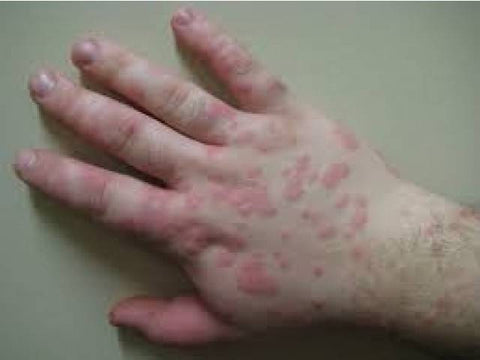
Eczema images (especially in children) will show dry, scaly skin or even cracks behind the ears and rashes on the cheeks, arms and legs. Further images will show (during flare-ups) open weeping or crusted sores. These often develop from the scratching or from infections. It is particularly difficult to stop children from scratching their eczema outbreaks when they are so itchy, but keeping the areas heavily moisturized will help as will keeping the nails cut very short and putting on mittens when your child is sleeping. The almost unbearable itchiness of the skin causes the person or child to scratch, which in turn worsens the itch and so it goes on.
Although the exact cause of eczema is not known, there are various risk factors including a family history of eczema and/or allergies; contacts with environmental irritants; sudden changes in temperature and stress. From eczema photos, you can see the appearance of eczema quite clearly.
A comparison between your own outbreak of eczema and our gallery of eczema images of this uncomfortable skin condition should encourage you to start treatment as quickly as possible. Any treatment should help to eliminate the itching before the healing process can begin.
Have Eczema? Read more about our eczema product - H-Eczema

 |
 |
 |
 |
 |
 |
 |
 |

|
 |