



Bulgur Is A High Fiber Food You Might Like To Try In Place Of Rice
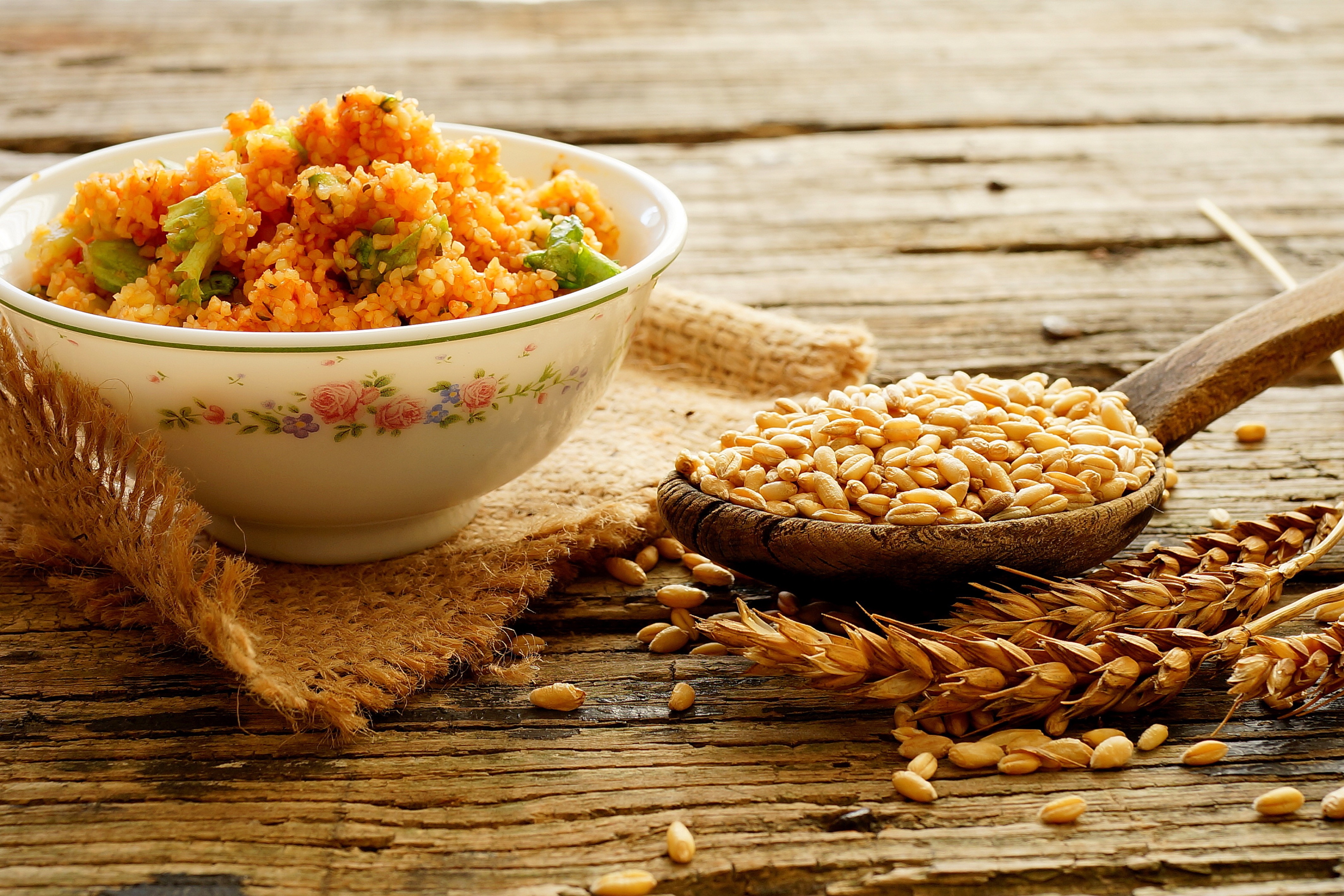
I only came across bulgur recently when I was researching something else and as it was new to me, I though I had better find out more.
Bulgur is what is left over after wheat kernels have been steamed, dried and crushed
It has been a staple food for years in Middle Eastern countries because it is an inexpensive source of low fat protein as well as being high in fiber. 1 cup of bulgur has fewer calories, less fat and more than twice the fiber of its equivalent in brown rice. The big plus is that the fiber content is insoluble meaning it absorbs water and promotes faster elimination of waste. A great way to avoid hemorrhoids and anal fissures.
Bulgur is also high in minerals, iron, magnesium and B vitamins
You can buy bulgur in a health food store, if not your local supermarket, and you can even make your own bulgur wheat (I will tell you how later in the page). When you buy it ready ground, it comes in three grinds – course, medium and fine. The coarse grind is used for pilaf, casseroles or stuffing; the medium for cereals, baking and vegetarian burgers while the finest is perfect for the popular salad called tabbouleh as well as hot breakfast cereals and desserts. You can also use whole grain bulgur to add to baked goods or use in soups and stews. It has a delicious, mildly nutty flavor.
Bulgur is easy to prepare because it comes partially cooked
Mix half a cup with 1 cup of liquid and simmer for 15 minutes. Stand for a further 10 minutes and then fluff up with a fork. It makes good nutritional sense to incorporate bulgur into your diet and if you need some ideas about how to do this, you can combine prepared bulgur with chopped fresh vegetables such as cucumbers, tomatoes, scallions, green peppers and fresh herbs. Combine with olive olive and a dash of vinegar or lemon juice. This is a basic tabbouleh.
More ways to use bulgur
For hot dishes, use instead of rice or add to soups and casseroles. You can also use bulgur as a binding instead of oats or breadcrumbs.
For cold salads, soak the bulgur before using by pouring boiling water over the bulgur 3:1, soak for 30 to 40 minutes and drain away the water. For a chewier consistency, let it absorb water for a little longer.
For more ideas and recipes go here to find among others a flavorful bulgur pilaf with green onions and mushrooms.
If you want to make your own bulgur wheat, it is not difficult.
You will need:
- Wheat berries
- Pure drinking water
- A sprouting jar or a glass jar with a loose-woven cloth to fasten over the top with a rubber band
- A jellyroll tray or baking tray on which to dry the sprouted wheat
- A grain grinder
Here are the steps you need to take
- Soak the wheat berries by filling your jar 1/3 full of the plain, dry wheat berries and adding water to fill. Leave for 1 day until the berries have plumped up.
- Sprout the wheat by setting the jar upside down to drain. Rinse the grain with pure water at least 2 to 3 times a day over the next 2 to 3 days and leave to drain.
- When the sprouts are one quarter to one third inch long, the wheat can be dried.
- Spread it out on a baking pan and leave in a warm place to dry thoroughly.
- Once dry, store in an airtight container until you are ready to use.
- When you want to use the bulgur, crack the grain in in a grain grinder.
If you want to store the grinds, use a screw top glass jar and put in the fridge where it will keep for several months.
And how did bulgur originate?
Bulgur was first made in the Mediterranean area thousands of years ago and has been popular with many difference civilizations such as Roman, Egyptian, Hebrew, Babylonian and Hitite people.
Now it is time to make it more popular in the West as another good health food.
Sources
The nutrition source: Fiber. (n.d.).
hsph.harvard.edu/nutritionsource/carbohydrates/fiber/. (Accessed, 20 September 2021).
Weickert MO, et al. (2008). Metabolic effects of dietary fiber consumption and prevention of diabetes.
jn.nutrition.org/content/138/3/439.full. (Accessed, 20 September 2021).
heart.org/HEARTORG/HealthyLiving/HealthyEating/HealthyDietGoals/Whole-Grains-and-Fiber_UCM_303249_Article.jsp#.WVVtshMrIdV. (Accessed, 20 September 2021).
Written by Jane Chitty

Jane writes for Healing Natural Oils, a producer and retailer of high-quality, all-natural treatments for a variety of conditions as well as a range of beauty products. Apart from writing about those various conditions, she also covers general health, environmental and other subjects of interest. She has lived in Kenya as well as Cape Town, South Africa and spent time in San Diego, USA. She now lives in Somerset, England with regular visits from her far-flung children and grandchildren. She is a keen gardener and enjoys growing fresh fruit and vegetables with her husband on their joint allotment. As a result, there is something available to use in the kitchen virtually all year round. Her regular posts can be found on our blog.