



Anal Fissures: Causes, Symptoms, Diagnosis and Treatment
Home > Health Article > Anal Fissures
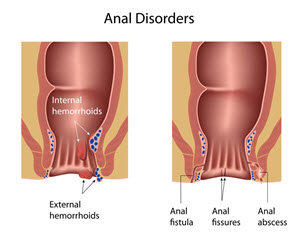 What are Anal Fissures?
Anal fissures and hemorrhoids are both very common in pregnant women as well as in others including the elderly. Bleeding hemorrhoids in pregnant women may occur during the last few months of pregnancy or even during the strain of labor. Some pregnant women may notice fissures during pregnancy or after labor.
Table of contents:
Causes
Bleeding Anal Fissures
Symptoms
Treatment
Fissures in Pregnant Women
Anal Fissures in Children
Causes of Anal Fissures
Most anal fissures and hemorrhoids are caused by the same factors. The most common cause of anal fissures is trauma to the anus or anal canal creating a cut or tear. It can sometimes be brought on by bowel movements, diarrhea or hardened stool.
Anal fissures - these do bleed
An anal fissure is basically one or more little tears in the anal cavity which bleed when a person has a hard stool. Anal fissures may become larger if a person is often constipated, from holding in a stool for long periods of time or even from having a bad diet with a lack of water and fiber. Sometimes the anal cavity may tear on its own in stressful situations where the muscles are used a lot. Anal fissures can be taken care of with proper treatment for the symptoms and a good diet (which emphasizes on making the stool softer and easier to pass). Sometimes the anal fissures will not disappear and may even cause scars to be left behind.
Symptoms of Anal Fissures
An anal fissure is most commonly referred to as a torn rectum. An anal fissure is very painful as mentioned previously, because of the location of the cut. Bleeding will frequently occur, even during bowel movements. Some people will end up trying to avoid having a bowel movement because the pain is so severe. This unfortunately leads to constipation and further problems. If a person becomes constipated and has an anal fissure, this will make the pain much more severe when stool is finally passed, as constipation usually leads to hardening of the stool. The pain caused by an anal fissure can also lead to painful urination or even frequent urination.
The affected area can also become intensely irritated and itchy. A pus discharge can also occur from the opening of the wound, as well as bleeding. Bleeding is very common in infants with anal fissures.
Resolving Anal Fissures
If you are feeling a sharp knife-like pain when using the toilet to pass a stool (and this pain continues for some time afterwards) then you could have anal fissures. Often you will notice some bright red blood on the stool or on the toilet tissue too.
You have many choices when it comes to finding an anal fissure symptom treatment and hand in hand with any of this is good home care and lifestyle habits. Top of the list is to ease the pain and keep the bowel movements soft and regular.
- A natural product specially formulated for anal fissures symptoms such as H-Fissures Formula will soothe and treat the symptoms safely and gently.
- If constipation is a problem, use a mild bulk forming laxative or stool softener to remedy the situation.
- Avoid activities that may cause hemorrhoids
- A mild pain reliever can be taken if necessary but avoid anything with codeine which can cause even more constipation.
- Apply an ice pack wrapped in a towel to the area to ease the discomfort.
- Take regular warm soaking baths to which some salt has been added to help relax the anus.
- Use petroleum jelly to ease the elimination of a stool.
- After a bowel movement, clean the anus with warm water and dry gently or use fragrant-free baby wipes.
- Never resist the urge to go to the toilet as putting this off can cause bigger and harder feces to form.
- Look at your lifestyle habits – does your diet contain plenty of fresh fruit and vegetables together with wholegrain cereals such as brown rice. Bran and other fiber supplements can be added plus dried fruit such as prunes for extra fiber bulk.
- Are you drinking plenty of fluids - preferably 8 glasses of filtered water daily?
- Colon cleansing is another method used for anal fissures. Enemas are a safe and secure process for colon cleansing because if your colon is clean, it can speed up the healing process, making your anal area strong enough to fight fissures. The cleaning process not only provides you with a clean rectal area, but also a useful break from bowel movements for about 1-3 day while softening the stools, allowing time for the anus to heal.
- If an anal fissure become chronic and does not heal, some medical practitioners will suggest an injection of botox that temporarily paralyses part of the anal internal muscle or sphincter, reduces spasm and thereby decreases the pressure on the anus. The blood flow then improves and healing can take place.
- Surgical procedures are another option with such severe fissures, when it is necessary to relieve the excessive pressure within the anal canal. Lateral sphincterotomy is a relatively new and successful procedure for stubborn chronic fissures.
What are the ingredients often used in homeopathic products for Anal Fissures?
Homeopathy is a system of alternative medicine that uses highly diluted substances, which practitioners claim can cause the body to heal itself. For anal fissures, homeopathic practitioners might recommend a variety of remedies based on the individual's specific symptoms and overall constitution. Some commonly recommended homeopathic remedies for anal fissures include:
- Nitric Acid: Often prescribed for anal fissures accompanied by sharp, shooting pains and bleeding after bowel movements.
- Graphites: Recommended for anal fissures with hard, knotty stools and itching around the anus.
- Paeonia: Used for fissures with severe pain and a burning sensation.
- Ratanhia: Indicated for intense pain during and after passing stools, often described as feeling like broken glass.
- Aesculus: Used for painful, dry fissures accompanied by a feeling of fullness or dryness in the rectum.
- Hamamelis: Often recommended for fissures with bleeding and a sore or raw feeling.
- Silicea: Indicated for chronic fissures and those that are slow to heal.
- Hydrastis: Used for fissures accompanied by constipation and hard stools.
- Calendula: Known for its healing properties, it's sometimes recommended as an ointment or tincture for topical application to promote wound healing.
- Staphysagria: Used for fissures resulting from hard stools or constipation, especially after surgical procedures.
It's important to note that while some people find relief using homeopathic remedies, scientific evidence supporting the efficacy of homeopathy is limited. If someone is considering homeopathic treatment for anal fissures or any other condition, it's essential to consult with a qualified homeopathic practitioner and also inform their primary healthcare provider.
What are the homeopathic ingredients in Healing Natural Oils H-Fissures Formula?
The ingredients in the Healing Natural Oils H-Fissures Formula are:
Active Ingredients:
- Calendula officinalis 12C: Calendula is known for its healing properties and is often used in various skin care products and ointments to promote wound healing.
- Chamomilla 6C: Chamomilla (Chamomile) is often used for its soothing and anti-inflammatory properties.
Inactive Ingredients:
- Corylus avellana nut oil: Commonly known as hazelnut oil.
- Essential Oil Blend:
- Helichrysum italicum flower
- Lavandula officinalis flower bud: Commonly known as lavender
- Matricaria recutita flower: Another form of chamomile
From the list of ingredients commonly used in homeopathic treatments for anal fissures that were provided earlier, Calendula is the only ingredient that matches with the ingredients in the Healing Natural Oils H-Fissures Formula.
Anal Fissures in Pregnant Women
Anal fissures occur when there is a small tear in the lining of the rectum and the rectum bleeds. An anal fissure can occur when a very hard bowel movement or stress to the inner wall of the anus cause it to tear the inner tissue. Anal fissures may cause a lot of sharp pain inside the anus which can be almost unbearable. Anal fissures may disappear on their own through the body's natural healing. This can be accelerated if a person eats right and makes sure to watch their diet in order to avoid constipation which will aggravate the condition.
Symptoms and Identifying Anal Fissures in Pregnancy
Since fissures are common in pregnant women and even infants there are many signs that an anal fissure may be present. Obviously like any other cut if something opens it up again it will bleed, an anal fissure is very much like this. Pregnant women may notice there is blood on their toilet tissue or directly on their stool. Pain when having a bowel movement may indicate an anal fissure.
Having a hard or constipated bowel movement can tear the anus resulting in a fissure. It is advisable to seek a consultation with a medical professional if you have concerns during pregnancy.
Anal Fissures in Children
Anal fissures in children are common with more than 90% of children with blood in their stools diagnosed as having an anal fissure. Baby anal fissures are especially likely. Anal fissures are a common problem in children younger than one year, often affecting as many as 8 out of 10 babies. The rate of anal fissures decreases rapidly with age. They become much less common among school aged children. These often painful anal fissures are usually caused by injury to the anal canal during the passing of a large or hard bowel movement. Of course injury could also be caused if the child was being sexually abused and it is important to be aware of that. Any bleeding from the fissure will stop on its own within 5 to 10 minutes of a bowel movement while the fissure itself will usually heal within a couple of days.
Symptoms of Anal Fissures in Children
-
Bright red blood in the stool
-
A few streaks or flecks of blood in the stool
-
The blood appears on the surface of the bowel movement or on the toilet tissue after wiping.
-
Your child passes either a large stool or a hard stool just before the blood is visible.
-
Your child cries out in pain when having a bowel movement and/or for some time afterwards.
-
A shallow tear at the opening of the anus may sometimes be visible when your child's buttocks are spread apart.
-
Touching the tear causes mild pain.
Resolving Anal Fissures in Children
You can help your baby or child to heal by the following good home care treatment:
- Warm saline baths for up to 20 minutes 3 times per day. Add 2 ounces of table salt or baking powder to a bath or basin of warm water for you child to sit in. Avoid soap on the affected area and gently pat dry after the soaking.
- After a bowel movement, clean the area gently with warm water or use a fragrance- free baby wipe. Do not use dry toilet paper until the fissures have healed.
- Use a natural product to soothe and treat the symptoms. H-Fissures Formula can be used on children from the age of 4 years for a safe and gentle solution.
- Increase the fiber in your child's diet with plenty of fresh fruit and vegetables, legumes and whole wheat products while cutting down on dairy to make sure he or she does not become constipated. You may need to use a mild laxative or stool softener for a few days as a temporary measure.
- Encourage your child to drink plenty of liquids, especially water. Although most fluid will pass out as urine, some ends up in the gut and softens the feces.

Anal fissures in children can sometimes cause an additional problem when they become aware that passing a stool is going to be painful. They then tend to hold on, resisting the urge to have a bowel movement which means even larger and harder feces can form that cause even more pain when they are finally eliminated. This is why in some cases it becomes necessary to use a laxative to ensure soft, loose fissures while the healing process takes place.
Sources
Feldman M, et al.(2021), eds. Anal diseases. In: Sleisenger and Fordtran's Gastrointestinal and Liver Disease: Pathophysiology, Diagnosis, Management. 11th ed. Elsevier.https://www.clinicalkey.com. (Accessed February 9, 2021).
Anal fissure. American Society of Colon and Rectal Surgeons. https://fascrs.org/patients/diseases-and-conditions/a-z/anal-fissure-expanded-information (Accessed February 2021)
Nasr M, et al. (2010). Botulinum toxin injection versus lateral internal sphincterotomy in the treatment of chronic anal fissure: A randomized controlled trial. (Accessed February 10,2021)